Professional steam removal rate, with typical jobs totaling $650–$2,400. Steaming is the shingle-safe method — chipping and rock salt destroy roofs.
AngiIce Dam Prevention: Local Deadlines by City
Ice dams form when heat escaping into the attic melts the underside of the snowpack, and that meltwater refreezes at the cold eaves. The fix is a cold, well-vented roof, so the real work — air sealing and insulation — happens before snow season, which starts on a different date in each city below. Our guidance paraphrases University of Minnesota Extension and the National Weather Service.
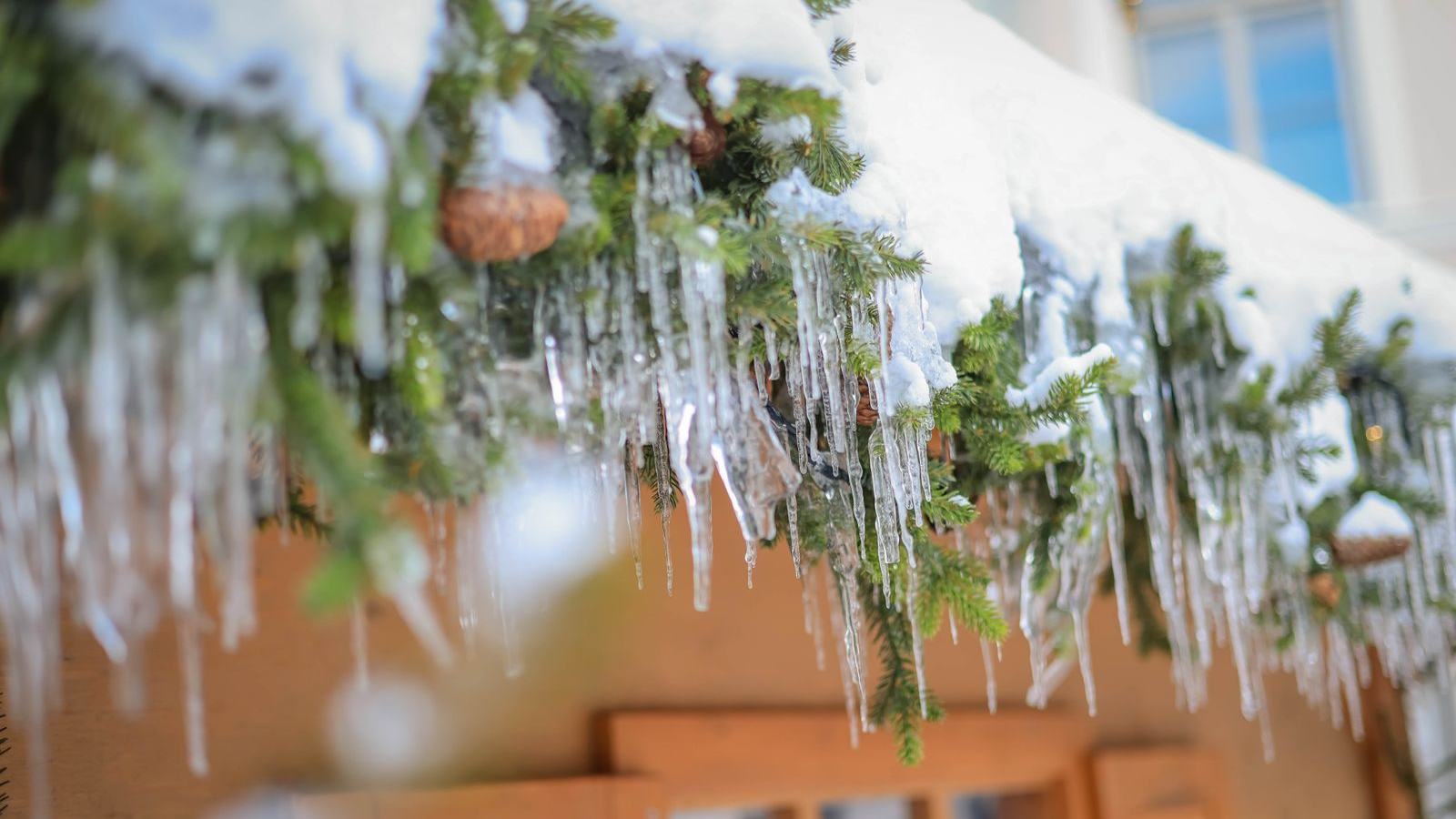
Deadlines for the largest cities
| City | State | Local deadline | |
|---|---|---|---|
| New York | NY | Nov 15 | View → |
| Chicago | IL | Oct 16 | View → |
| Philadelphia | PA | Nov 15 | View → |
| Indianapolis | IN | Nov 15 | View → |
| Columbus | OH | Oct 16 | View → |
| Charlotte | NC | Dec 16 | View → |
| Detroit | MI | Nov 15 | View → |
| Seattle | WA | Nov 15 | View → |
| Denver | CO | Sep 15 | View → |
| Washington | DC | Nov 15 | View → |
| Boston | MA | Nov 15 | View → |
| Nashville | TN | Dec 16 | View → |
| Baltimore | MD | Nov 15 | View → |
| Oklahoma City | OK | Nov 15 | View → |
| Louisville | KY | Nov 15 | View → |
| Portland | OR | Dec 16 | View → |
| Milwaukee | WI | Oct 16 | View → |
| Albuquerque | NM | Nov 15 | View → |
| Kansas City | MO | Nov 15 | View → |
| Virginia Beach | VA | Dec 16 | View → |
| Colorado Springs | CO | Sep 15 | View → |
| Omaha | NE | Oct 16 | View → |
| Raleigh | NC | Nov 15 | View → |
| Minneapolis | MN | Oct 16 | View → |
| Tulsa | OK | Nov 15 | View → |
| Cleveland | OH | Oct 16 | View → |
| Wichita | KS | Nov 15 | View → |
| Aurora | CO | Sep 15 | View → |
| St. Louis | MO | Nov 15 | View → |
| Saint Paul | MN | Oct 16 | View → |
| Lexington-Fayette | KY | Nov 15 | View → |
| Pittsburgh | PA | Oct 16 | View → |
| Anchorage | AK | Sep 15 | View → |
| Cincinnati | OH | Nov 15 | View → |
| St. Paul | MN | Oct 16 | View → |
| Toledo | OH | Oct 16 | View → |
| Greensboro | NC | Nov 15 | View → |
| Newark | NJ | Nov 15 | View → |
| Lincoln | NE | Oct 16 | View → |
| Buffalo | NY | Oct 16 | View → |
| Jersey City | NJ | Nov 15 | View → |
| Fort Wayne | IN | Oct 16 | View → |
| Norfolk | VA | Nov 15 | View → |
| Durham | NC | Dec 16 | View → |
| Madison | WI | Oct 16 | View → |
| Lubbock | TX | Oct 16 | View → |
| Winston-Salem | NC | Nov 15 | View → |
| Boise | ID | Oct 16 | View → |
| Reno | NV | Oct 16 | View → |
| Chesapeake | VA | Nov 15 | View → |
How many of the largest US cities hit their local ice dam prevention deadline in each month — proof that one national date cannot work.
Find every covered city for your state in the list below.
How an ice dam forms
Heat escaping into the attic melts snow on the deck; the meltwater refreezes at the cold eave and backs up under the shingles.
The mechanics at the eaves
Warm air leaks into the attic and heats the roof deck. Snow melts against the warm deck, runs down to the overhanging eave, which stays at outside temperature, and refreezes into a ridge of ice. The ridge traps later melt, which pools and can work its way under the shingles and into the ceiling below.
The three levers are air sealing, insulation, and ventilation — all of which keep the roof deck cold and uniform. Roof raking and melt socks treat symptoms; the attic work treats the cause.
Raking and heat cable
After a storm drops four inches or more, rake the lower three to six feet of roof from the ground with an extension rake. Keep clear of the edge and never climb an icy roof. For a roof that dams every year, heat cable installed in a zig-zag at the eaves keeps a drainage path open; run it only when needed.
How we time the season
We estimate the start of snow season from monthly snowfall normals — the first month that averages at least one inch of snow — and pair it with the live snow-and-thaw outlook on each city page. Because it is an estimate, we label it as such. See the methodology page for details.
Ice dam removal cost & key numbers
Verified national benchmarks; sources open in a new tab (nofollow).
Attic insulation DOE and ENERGY STAR recommend for most US climate zones. Air-seal ceiling penetrations first — insulation alone will not stop ice dams.
ENERGY STARHow far up from the eaves to clear snow with a roof rake after each storm — it removes the meltwater source in the ice-dam zone. A telescoping rake costs $30–$100.
TravelersTypical interior repair bill once an ice dam pushes water into the attic and walls — wet insulation, saturated drywall, and mold remediation if drying is delayed.
University of Minnesota ExtensionIce Dam Prevention: related searches
Searches this guide answers: ice dam removal near me, roof rake for snow, heat cable for roof cost, and why icicles on gutters are a warning sign.
ice dam removal costice dam steamingroof rake for snow removalattic air sealingattic insulation R-valueheat cable for roofcalcium chloride sock ice damice and water shieldsoffit and ridge venticicles on gutters warningwater stain on ceiling winterroof snow removal service
Find your state
Alaska
2 cities · deadlines from Sep 15–Oct 16
Arizona
3 cities · deadlines from Sep 15–Nov 15
Arkansas
7 cities · deadlines from Nov 15–Dec 16
California
1 cities · deadlines from Nov 15–Nov 15
Colorado
20 cities · deadlines from Aug 16–Oct 16
Connecticut
15 cities · deadlines from Oct 16–Nov 15
Delaware
2 cities · deadlines from Nov 15–Dec 16
District of Columbia
1 cities · deadlines from Nov 15–Nov 15
Idaho
9 cities · deadlines from Sep 15–Nov 15
Illinois
52 cities · deadlines from Oct 16–Nov 15
Indiana
21 cities · deadlines from Oct 16–Nov 15
Iowa
13 cities · deadlines from Oct 16–Oct 16
Kansas
11 cities · deadlines from Oct 16–Nov 15
Kentucky
6 cities · deadlines from Nov 15–Dec 16
Maine
2 cities · deadlines from Oct 16–Oct 16
Maryland
7 cities · deadlines from Nov 15–Dec 16
Massachusetts
36 cities · deadlines from Sep 15–Nov 15
Michigan
31 cities · deadlines from Oct 16–Nov 15
Minnesota
25 cities · deadlines from Sep 15–Oct 16
Missouri
16 cities · deadlines from Oct 16–Nov 15
Montana
5 cities · deadlines from Sep 15–Oct 16
Nebraska
4 cities · deadlines from Sep 15–Oct 16
Nevada
3 cities · deadlines from Oct 16–Nov 15
New Hampshire
3 cities · deadlines from Oct 16–Oct 16
New Jersey
22 cities · deadlines from Nov 15–Nov 15
New Mexico
6 cities · deadlines from Sep 15–Nov 15
New York
17 cities · deadlines from Sep 15–Nov 15
North Carolina
14 cities · deadlines from Nov 15–Dec 16
North Dakota
4 cities · deadlines from Sep 15–Oct 16
Ohio
33 cities · deadlines from Oct 16–Nov 15
Oklahoma
9 cities · deadlines from Nov 15–Nov 15
Oregon
7 cities · deadlines from Oct 16–Dec 16
Pennsylvania
13 cities · deadlines from Oct 16–Nov 15
Rhode Island
6 cities · deadlines from Oct 16–Oct 16
South Carolina
2 cities · deadlines from Dec 16–Dec 16
South Dakota
3 cities · deadlines from Sep 15–Sep 15
Tennessee
6 cities · deadlines from Nov 15–Dec 16
Texas
2 cities · deadlines from Oct 16–Oct 16
Utah
18 cities · deadlines from Sep 15–Oct 16
Vermont
2 cities · deadlines from Oct 16–Oct 16
Virginia
15 cities · deadlines from Nov 15–Dec 16
Washington
23 cities · deadlines from Oct 16–Dec 16
West Virginia
2 cities · deadlines from Oct 16–Nov 15
Wisconsin
20 cities · deadlines from Oct 16–Oct 16
Wyoming
2 cities · deadlines from Aug 16–Sep 15
Get the Ice Dam Prevention alert
We will email you when local conditions cross the line. Double opt-in; unsubscribe anytime.
Frequently asked questions
What causes ice dams?
Attic heat melts the underside of the snowpack; the meltwater runs to the cold eave and refreezes into a ridge that traps later melt. University Extension programs point to attic heat loss as the root cause.
How much snow causes a dam?
There is no single number, but several inches that linger through thaw-freeze weather give dams the material they need. A roof that sheds snow or stays uniformly cold rarely dams.
Do heat cables work?
They do not fix the attic-heat cause, but zig-zag cable at the eaves can keep a drainage path open. Use them as one part of a plan with air sealing, insulation, and ventilation.
Is roof raking worth it?
Yes — removing the lower three to six feet of snow from the ground after a storm takes away the dam's material and is one of the safest steps. Never climb an icy roof.
How do I prevent dams long-term?
Air seal attic leaks, add insulation, and keep soffit-to-ridge ventilation open so the roof deck stays cold and uniform. That treats the cause, not the symptom.
Will insurance cover the damage?
Many policies cover sudden interior water damage from a dam, but deductibles and repeat-claim scrutiny vary. Prevention is cheaper than repeat claims.
How do I spot a forming dam?
Look for a thick ice ridge at the eaves, large gutter icicles, and ceiling or wall-top stains inside. Together with a warm attic, those are warning signs.
Are icicles a problem?
Icicles alone are not proof of a dam, but combined with lingering roof snow and a warm attic they suggest meltwater is refreezing at the edge.
Other winter-prep guides
Sprinkler WinterizationFrozen Pipe ProtectionCar Battery Cold-StartSnow Blower PrepSump Pump TestRV WinterizationBoat WinterizationMotorcycle Storage
See the methodology for how these dates are calculated and their limits, and the data sources behind them.
Data: NOAA NCEI 1991–2020 U.S. Climate Normals; live outlook by Open-Meteo. Last updated: July 25, 2026.