Professional steam removal rate, with typical jobs totaling $650–$2,400. Steaming is the shingle-safe method — chipping and rock salt destroy roofs.
AngiWhen to Prevent Ice Dams in Gary, IN
ON TRACK157 days until snow season (estimated)Dec 15
Ice dams become a risk in Gary once snow settles on the roof, which typically starts near December 15 (NOAA snowfall normals, about 40" a year), so prep the attic and roof edge before then. The early-odds date runs roughly 12 days ahead of the median, so build in that buffer.
Nov 15Local deadline
Dec 15Snow season anchor
30 days28°F window spread
40 inSnow per season
OUTLOOK
Typical first snow season (estimated) near Dec 15; local deadline about Nov 15. The live 10-day outlook loads here.
Local freeze dates for Gary
| Threshold | Early (1-in-10) | Median | Late (9-in-10) |
|---|---|---|---|
| 32°F (light freeze) | Oct 15 | Oct 27 | Nov 9 |
| 28°F (hard freeze) | Oct 26 | Nov 7 | Nov 25 |
| 24°F (severe) | Nov 4 | Nov 19 | Dec 5 |
Bars span the early (1-in-10) to late (9-in-10) window for each freeze threshold; the dot marks the median year. The dashed line is the local prep deadline.
NOAA station: Indiana Dunes Nl · 13.6 mi away · 680 ft elevation.
- Gary has one of the later first freezes, so watch the live outlook for the odd early cold night.
Numbers for Gary come from Indiana Dunes Nl, 13.6 miles away at 680 feet, where the medians fall 32°F by Oct 27, 28°F by Nov 7, 24°F by Nov 19. Year to year the 28°F date has ranged from Oct 26 to Nov 25 — about 30 days apart. Spring's last 32°F freeze clears around Apr 22. Snowfall averages 40 inches a year, first reaching an inch near December.
The freeze arrives in two steps in Gary: 32°F around Oct 27, then a hard 28°F near Nov 7. The 32°F date swings from Oct 15 at its earliest to Nov 9 at its latest, near 25 days. The last spring freeze averages Apr 22 and as late as May 8, which sets the safe window for reopening outdoor water and de-winterizing gear. Roughly 40 inches of snow fall in an average year, so a clear roof edge and a running snow blower matter as much as the freeze itself.
Your ice dams checklist
- Before snow flies, seal attic air leaks around lights, the attic hatch, and plumbing stacks so warm air stays out of the attic.
- Add insulation to bring the attic floor up to a deep, even blanket; a cold roof deck is what stops dams from forming.Helpful gear: Attic vent baffles — Recommended pick
- Confirm soffit and ridge vents are open and clear so outside air keeps the underside of the roof cold.
- After a storm drops four inches or more, rake the lower three to six feet of roof from the ground.Helpful gear: 21-foot roof rake — Recommended pick
- Keep a safe distance from the edge while raking and never climb an icy roof; work from the ground.
- If a dam forms, lay a calcium-chloride melt sock across it to open a drainage channel — do not chip at the ice.Helpful gear: Calcium chloride roof-melt socks — Recommended pick
- For a roof that dams every year, have heat cable installed at the eaves before the season starts.Helpful gear: Roof de-icing heat cable — Recommended pick
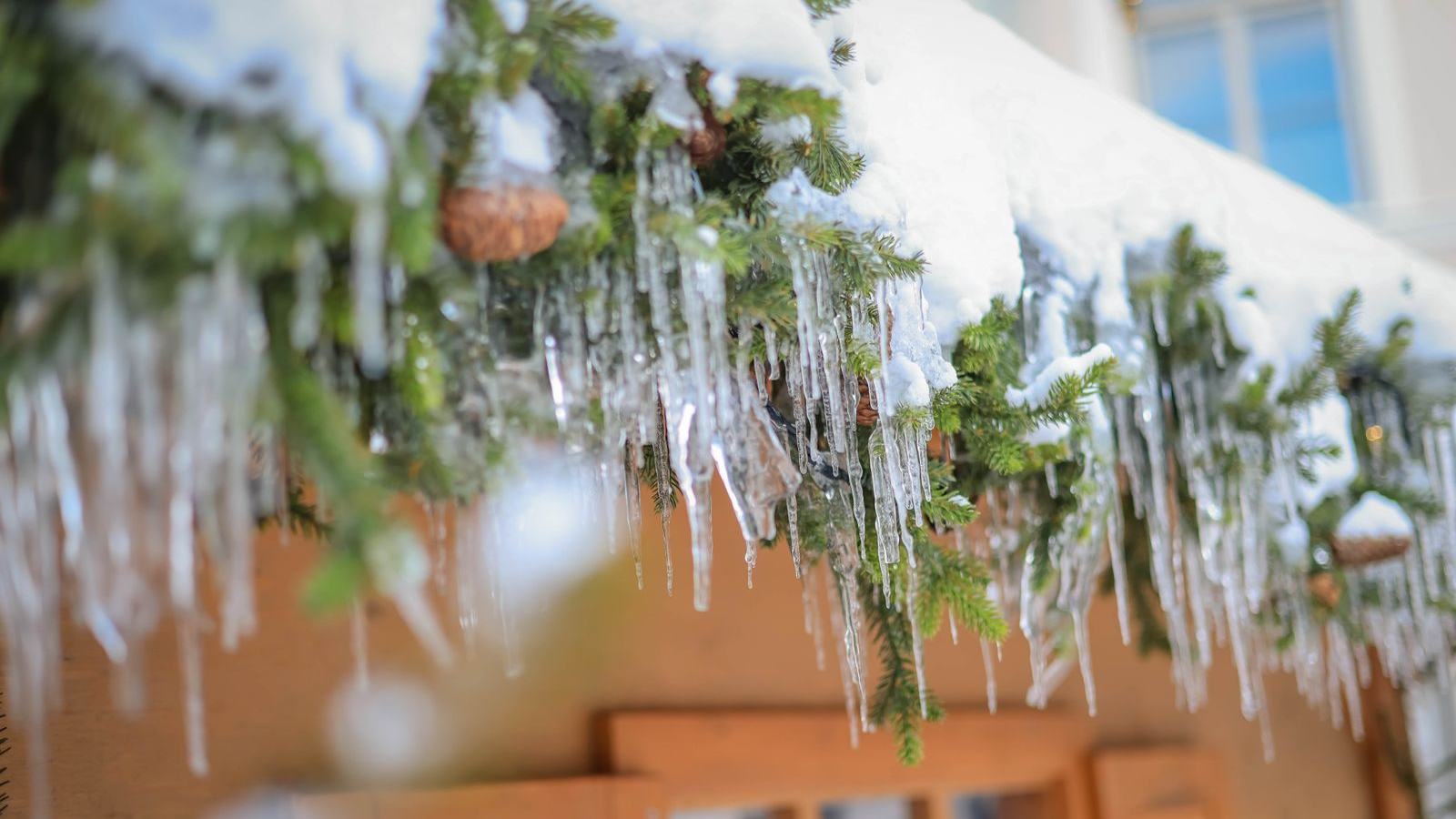
- Watch for long icicles and interior ceiling stains; both are early signs water is backing up under the shingles.
What to have on hand
As an Amazon Associate we may earn from qualifying purchases. Product picks are editorial; links do not change what you pay.
21-foot roof rake
Telescoping rake that clears the lower roof edge from the ground.
Recommended pickCalcium chloride roof-melt socks
Filled tubes laid across the eave to open a drainage channel.
Recommended pickRoof de-icing heat cable
Zig-zag cable that keeps a melt path open at the eaves.
Recommended pickAttic vent baffles
Chutes that keep soffit airflow open so the roof stays cold.
Recommended pickIce dam removal cost & key numbers
Verified national benchmarks; sources open in a new tab (nofollow).
Attic insulation DOE and ENERGY STAR recommend for most US climate zones. Air-seal ceiling penetrations first — insulation alone will not stop ice dams.
ENERGY STARHow far up from the eaves to clear snow with a roof rake after each storm — it removes the meltwater source in the ice-dam zone. A telescoping rake costs $30–$100.
TravelersTypical interior repair bill once an ice dam pushes water into the attic and walls — wet insulation, saturated drywall, and mold remediation if drying is delayed.
University of Minnesota ExtensionWhat this means locally
Against its neighbors, Gary (first freeze Dec 15) runs close to Hammond (Dec 15) and close to Calumet City (Dec 15). Across Indiana, local prep deadlines in our data range from Oct 16 to Nov 15, so a statewide rule of thumb would miss Gary by weeks. In Gary, that same cold is your cue to guard your pipes and ready your snow blower. Keeping an eye on the rest of the county? The same local math is on our Fort Wayne and Greenwood pages.
Other winter jobs in Gary
Every task below is dated to Gary's own freeze and snow normals.
Get the Ice Dam Prevention alert for your city
We will email you when local conditions cross the line. Double opt-in; unsubscribe anytime.
Frequently asked questions
What causes ice dams?
Heat escaping into the attic warms the roof deck and melts the underside of the snowpack. That meltwater runs down to the cold eave, where it refreezes into a ridge of ice. The dam then traps later melt, which can back up under the shingles. University Extension programs point to attic heat loss as the root cause.
How much snow on a roof causes ice dams?
There is no single number, but several inches of snow that lingers gives dams the material they need, especially when days rise above freezing and nights fall below. A roof that sheds snow quickly or stays uniformly cold rarely dams. Watch for snow that sticks around through a stretch of thaw-freeze weather.
Do heat cables prevent ice dams?
Heat cables do not fix the underlying attic-heat problem, but installed in a zig-zag at the eaves they can keep a melt path open so water drains instead of pooling. They work best as one part of a plan that also includes air sealing, insulation, and ventilation. Run them only when needed to save energy.
Is roof raking worth it?
Removing the lower three to six feet of snow from the ground after a storm takes away the material a dam forms from, and it is one of the safest do-it-yourself steps. Use a roof rake with an extension and keep clear of the edge. Never climb onto an icy roof to rake.
Will my insurance cover ice dam damage?
Many homeowner policies cover sudden interior water damage from an ice dam, but coverage and deductibles vary, and repeated damage may raise questions about maintenance. Document the damage with photos. Preventing dams through attic work is cheaper and less disruptive than filing repeat claims.
How do I know if I have an ice dam forming?
Look for a thick ridge of ice at the eaves, large icicles hanging from the gutters, and water stains on interior ceilings or the tops of exterior walls. Icicles alone are not proof, but combined with a warm attic and lingering roof snow they are a warning worth acting on.
How do I remove an ice dam without wrecking the roof?
The shingle-safe professional method is low-pressure steaming at $300–$700 per hour. From the ground you can rake snow off the first 3–4 feet above the eaves and lay a calcium-chloride-filled sock across the dam to melt a drainage channel. Never chip ice with hatchets or use rock salt — both destroy shingles, flashing and gutters.
Ice Dam Prevention: related searches
Searches this guide answers: ice dam removal near me, roof rake for snow, heat cable for roof cost, and why icicles on gutters are a warning sign.
ice dam removal costice dam steamingroof rake for snow removalattic air sealingattic insulation R-valueheat cable for roofcalcium chloride sock ice damice and water shieldsoffit and ridge venticicles on gutters warningwater stain on ceiling winterroof snow removal service
Data: NOAA 1991–2020 normals via Indiana Dunes Nl, live outlook by Open-Meteo. Sources · Methodology. Last updated: July 25, 2026.