Professional RV winterization by rig size — travel trailers at the low end, Class A motorhomes at the top. DIY costs $20–$60 in antifreeze and a siphon kit.
KOAWhen to Winterize Your RV in Bristol, CT
ON TRACK111 days until first 28°F freezeOct 30
In a typical year, winterize your RV in Bristol by October 20. The median first 28°F hard freeze at Bristol's NOAA station is October 30 (1991–2020 normals); one year in ten it arrives as early as October 14. Year to year the date swings about 31 days, which is why the live outlook beats the calendar.
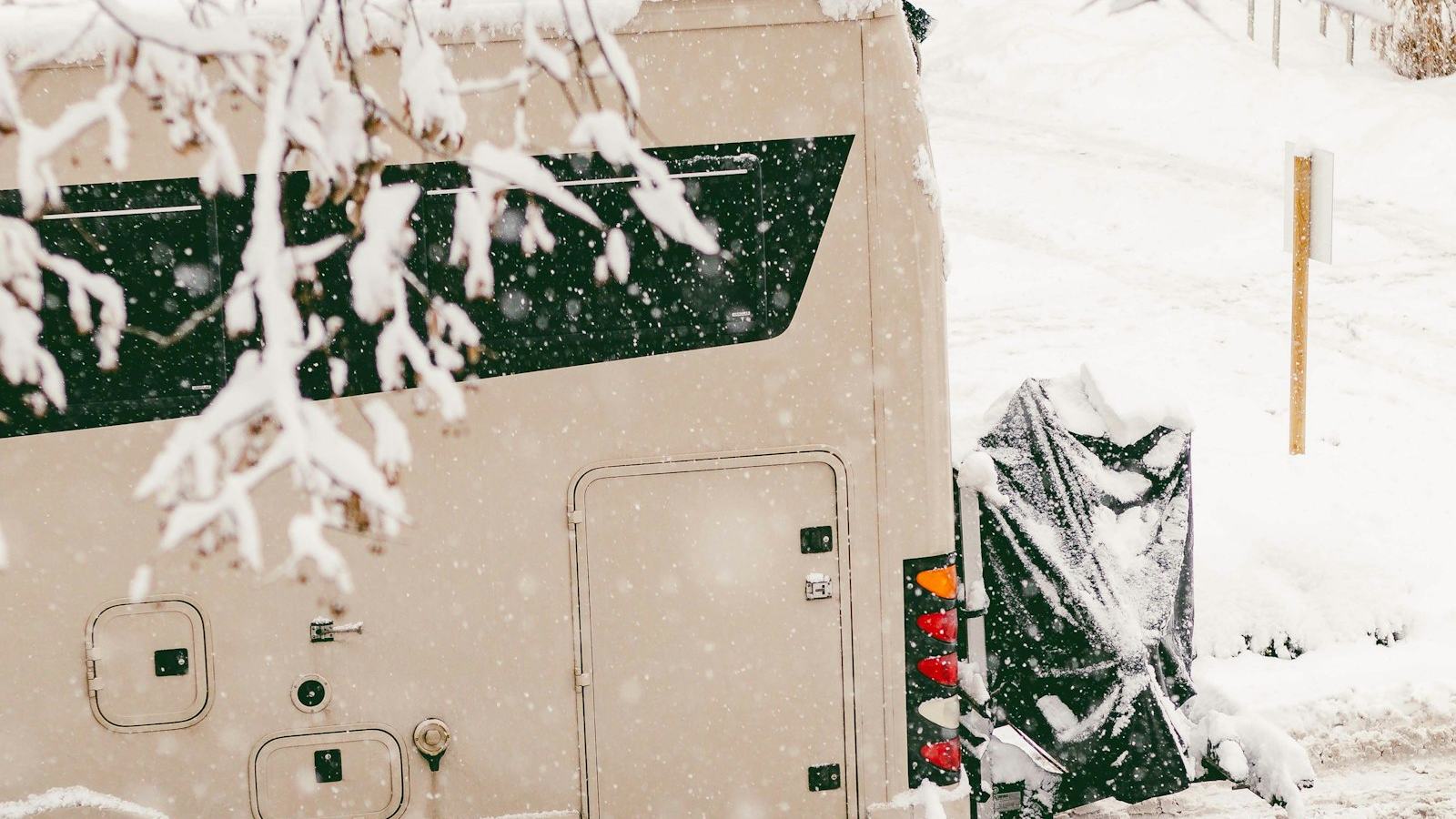
Oct 20Local deadline
Oct 30Median first 28°F
31 days28°F window spread
39 inSnow per season
OUTLOOK
Typical first first 28°F freeze near Oct 30; local deadline about Oct 20. The live 10-day outlook loads here.
Local freeze dates for Bristol
| Threshold | Early (1-in-10) | Median | Late (9-in-10) |
|---|---|---|---|
| 32°F (light freeze) | Oct 4 | Oct 18 | Nov 1 |
| 28°F (hard freeze) | Oct 14 | Oct 30 | Nov 14 |
| 24°F (severe) | Oct 26 | Nov 11 | Dec 1 |
Bars span the early (1-in-10) to late (9-in-10) window for each freeze threshold; the dot marks the median year. The dashed line is the local prep deadline.
NOAA station: Burlington · 8.5 mi away · 505 ft elevation.
- The first freeze in Bristol lands in mid-fall, a comfortable but not open-ended window.
Numbers for Bristol come from Burlington, 8.5 miles away at 505 feet, where the medians fall 32°F by Oct 18, 28°F by Oct 30, 24°F by Nov 11. That hard freeze has landed anywhere from Oct 14 to Nov 14, a swing of roughly 31 days. Spring's last 32°F freeze clears around Apr 25. Snowfall averages 39 inches a year, first reaching an inch near December.
The freeze arrives in two steps in Bristol: 32°F around Oct 18, then a hard 28°F near Oct 30. Year to year, the first 32°F night has fallen anywhere from Oct 4 to Nov 1 — about 28 days apart. Spring's final freeze lands near Apr 25 and as late as May 10, so that is when outdoor water and stored gear can safely come back online. Snowfall averages roughly 39 inches a year — enough that a working snow blower and a clear roof edge earn their keep.
Your rv checklist
- Drain the fresh, gray, and black tanks, then drain the water heater only after it has cooled and lost pressure.
- Bypass the water heater so you do not waste six gallons of antifreeze filling the tank.
- Blow out the lines with a compressor at about 30–40 psi, then pump non-toxic RV antifreeze through every faucet until it runs pink.Helpful gear: RV antifreeze (6-pack) — Recommended pick
- Use a water-pump converter kit to draw antifreeze straight from the jug through the plumbing.Helpful gear: Water pump converter kit — Recommended pick
- Pour a cup of antifreeze into each drain trap and the toilet to protect the seals.
- Fit a blow-out plug at the city-water inlet so you can clear that line too.Helpful gear: Blow-out plug — Recommended pick
- Remove batteries or put them on a maintainer, and store them off a cold concrete floor.
- Cover roof vents, close the propane, and set out traps or deterrents so mice do not move in.
What to have on hand
As an Amazon Associate we may earn from qualifying purchases. Product picks are editorial; links do not change what you pay.
RV antifreeze (6-pack)
Non-toxic pink fluid for the fresh-water plumbing and traps.
Recommended pickWater pump converter kit
Siphon kit that draws antifreeze straight through the pump.
Recommended pickBlow-out plug
Adapter that lets a compressor clear the lines before antifreeze.
Recommended pickHeated fresh-water hose
For anyone staying hooked up through a cold snap.
Recommended pickRV winterization cost & key numbers
Verified national benchmarks; sources open in a new tab (nofollow).
Non-toxic propylene glycol antifreeze a typical rig needs ($5–$10 per gallon); large fifth wheels take 4–5. Add a gallon each for a dishwasher or washer.
RV LifestyleAntifreeze wasted if you skip the water-heater bypass — the tank swallows it before any reaches the plumbing. A bypass kit pays for itself the first season.
CamcoReplacement cost of a freeze-cracked RV water pump; fittings, the toilet valve and the city-water inlet crack first. Most RV policies exclude freeze damage from skipped winterization.
ProgressiveWhat this means locally
Bristol freezes about a week ahead of New Britain (Nov 5) and close to Waterbury (Oct 30) — a reminder that even nearby towns differ by days. Statewide, Connecticut prep dates run Oct 20 through Nov 9, which is why Bristol gets its own number rather than a Connecticut-wide average. The same freeze also decides when to shut down your sprinklers and winterize a boat. Keeping an eye on the rest of the county? The same local math is on our Bridgeport and Danbury pages.
Other winter jobs in Bristol
Every task below is dated to Bristol's own freeze and snow normals.
Get the RV Winterization alert for your city
We will email you when local conditions cross the line. Double opt-in; unsubscribe anytime.
Frequently asked questions
At what temperature do RV pipes freeze?
An RV's exposed plumbing and thin-walled tanks can begin to freeze once temperatures sit in the mid-20s for a few hours, sooner than a house because there is little insulation around the lines. That is why the winterizing deadline tracks the first 28°F freeze rather than the first light frost.
How much RV antifreeze do I need?
Most travel trailers and motorhomes take about two to three gallons of non-toxic RV antifreeze, and larger rigs more. Bypassing the water heater saves roughly six gallons you would otherwise waste filling the tank. Buy an extra jug; stores sell out once the first freeze warnings hit.
Can I just use my RV furnace instead of winterizing?
Relying on the furnace is risky. A propane run-out, a tripped breaker, or a dead battery during a cold night leaves the plumbing unprotected, and the furnace may not keep the underbelly and bays warm enough anyway. Draining and adding antifreeze is the dependable way to protect the system.
How do I winterize an RV water heater?
Let the tank cool and lose pressure, then drain it and, if fitted, pull the anode rod. Do not add antifreeze to the water heater tank; instead, set the bypass valves so antifreeze skips the tank and fills only the lines. Fresh antifreeze in an unbypassed heater just wastes several gallons.
When is it safe to de-winterize an RV in Bristol?
Wait until the last spring freeze has passed, which averages near Apr 25 here. De-winterize by flushing the antifreeze from the lines, sanitizing the fresh tank, and checking for leaks before a trip. Reopening too early risks a surprise late freeze on a charged system.
Do I need to winterize an RV stored indoors?
A reliably heated indoor space that stays above freezing protects the plumbing, so full winterizing may not be needed. But an unheated garage or barn can still drop below freezing on a cold night. If you cannot guarantee the space stays warm, winterize to be safe.
How much does it cost to winterize an RV?
Professional service runs $150–$400 depending on rig size — travel trailers at the low end, Class A motorhomes and fifth wheels at the top, plus $15–$50 per add-on like a washing machine or ice maker. DIY costs $20–$60 total: 2–3 gallons of RV antifreeze plus a one-time water pump siphon kit.
What happens if I skip winterizing the RV?
Ice cracks the rigid parts first: the toilet flush valve, the water pump housing ($320–$800 to replace), the city-water inlet and the water heater tank ($500–$1,500 in parts). Hidden cracks often only show once the system is re-pressurized in spring, and most RV insurance policies exclude freeze damage caused by failure to winterize.
RV Winterization: related searches
Searches this guide answers: RV antifreeze how many gallons, water heater bypass kit, blow out RV lines with air, and RV winterization service near me.
RV winterization checklisthow to winterize a camperRV antifreeze how many gallonswater heater bypass RVblow out RV water linesnon-toxic RV antifreezeRV low point drainwinterize travel trailerRV pipes freeze temperatureRV freeze damage repair costde-winterize RV in springcamper winter storage
Data: NOAA 1991–2020 normals via Burlington, live outlook by Open-Meteo. Sources · Methodology. Last updated: July 25, 2026.